Why Am I So Irritable All the Time? Anxiety, Stress, Burnout, and Mental Exhaustion in Adults
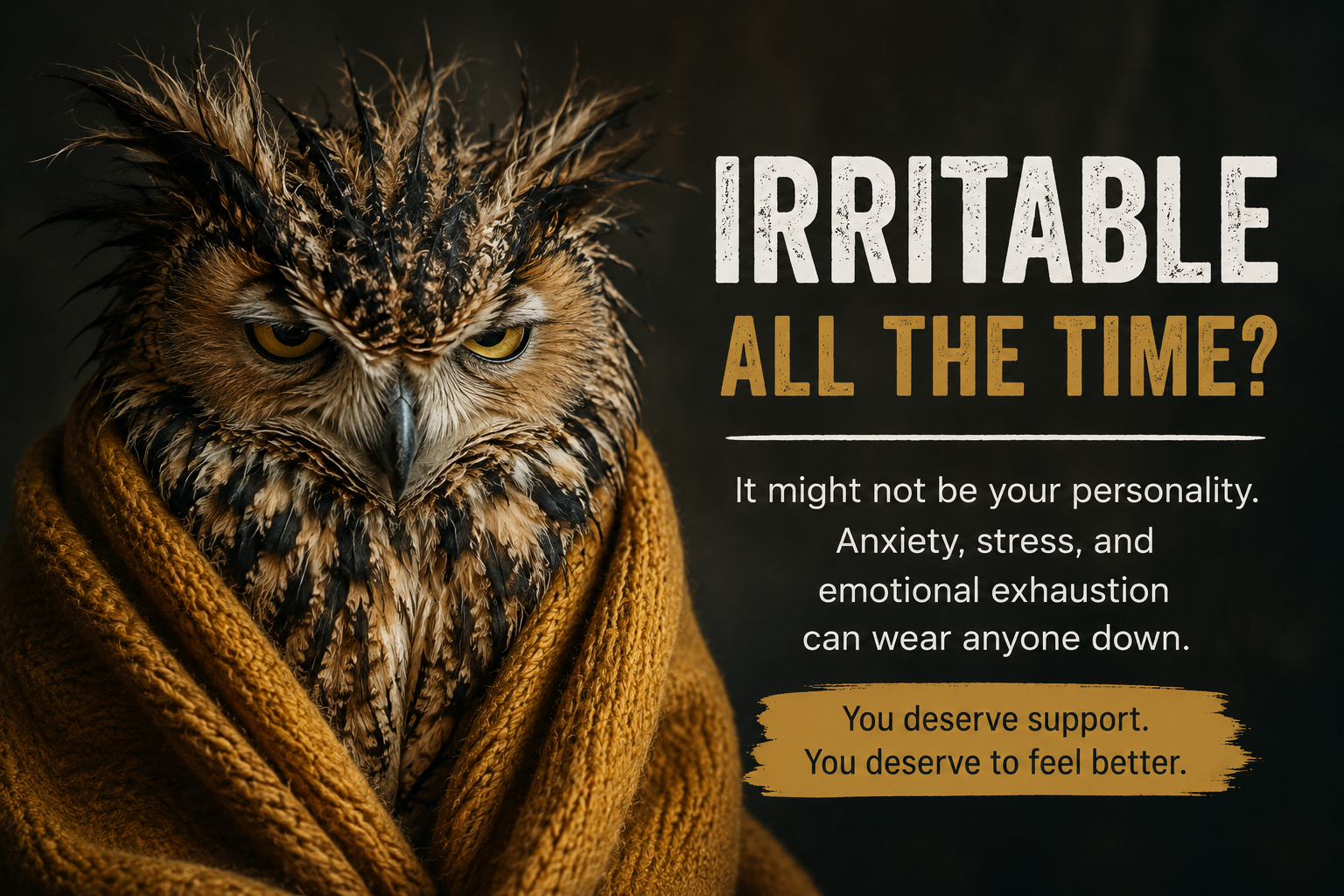
Many adults feel irritable all the time and assume they are simply becoming impatient, overwhelmed, or “short-tempered.” In reality, ongoing irritability is often connected to chronic stress, anxiety, emotional exhaustion, poor sleep, burnout, or mental overload.
Irritability is not always a personality problem. Sometimes it is a sign that your mind and nervous system have been under pressure for too long.
For many people, irritability can look like:
- Snapping at loved ones
- Feeling overwhelmed by small inconveniences
- Being easily overstimulated
- Feeling constantly “on edge”
- Having little patience
- Becoming emotionally exhausted by everyday responsibilities
If this sounds familiar, you are not alone.
Irritability Is Not Always “Just a Bad Mood”
Everyone becomes irritated occasionally. However, when irritability becomes frequent or constant, it may be a sign that your stress levels and mental health are being affected.
Many adults live in a constant state of mental overload. Work responsibilities, parenting, financial stress, relationships, social pressure, lack of downtime, and chronic worry can slowly wear down emotional resilience over time.
When the brain remains in a prolonged state of stress, even small frustrations can begin to feel overwhelming.
You may notice yourself:
- Becoming frustrated more quickly
- Feeling emotionally drained
- Avoiding people or social interaction
- Feeling mentally exhausted by simple tasks
- Having difficulty relaxing even during downtime
Many people experiencing chronic stress do not realize how emotionally depleted they have become until irritability starts affecting their daily life and relationships.
Common Signs of Stress and Emotional Overload
Chronic stress and emotional exhaustion can affect people differently, but common signs include:
- Feeling irritated by small things
- Constant overstimulation
- Difficulty “shutting your brain off”
- Racing thoughts
- Feeling mentally exhausted
- Increased sensitivity to noise or interruptions
- Feeling emotionally numb or detached
- Trouble concentrating
- Increased anxiety
- Physical tension or headaches
- Poor sleep
- Feeling overwhelmed by responsibilities
Sometimes irritability develops gradually, making it difficult to recognize how much stress has built up over time.
How Anxiety Can Cause Irritability
Many people think anxiety only looks like panic attacks or excessive worry. However, anxiety often shows up as irritability, frustration, emotional exhaustion, and difficulty relaxing.
When anxiety is persistent, the nervous system can remain in a heightened state of alertness. This can leave people feeling mentally “on” all the time.
Over time, this mental strain may lead to:
- Increased frustration tolerance problems
- Emotional exhaustion
- Feeling overstimulated
- Difficulty coping with stress
- Trouble sleeping
- Physical fatigue
- Increased irritability
Adults with anxiety may feel like their brain never fully slows down. Constant overthinking, racing thoughts, and worry can make everyday stressors feel much harder to tolerate.
For some individuals, irritability may become one of the most noticeable signs that their stress or anxiety levels are becoming difficult to manage.
Can Burnout Cause Mood Changes?
Yes. Burnout can significantly affect mood, emotional regulation, and stress tolerance.
Burnout is not simply “being tired.” Emotional burnout often develops after prolonged periods of chronic stress without enough recovery time.
Many adults experiencing burnout report:
- Feeling emotionally drained
- Becoming cynical or detached
- Losing motivation
- Feeling mentally exhausted all the time
- Increased irritability
- Feeling overwhelmed by responsibilities
- Reduced patience with others
- Difficulty enjoying things they once enjoyed
Burnout can affect parents, caregivers, healthcare workers, professionals, students, and individuals balancing multiple responsibilities.
When the brain and body remain under prolonged stress, emotional regulation often becomes more difficult.
When Irritability May Be More Than Stress
Although stress and burnout are common causes of irritability, ongoing mood changes can sometimes be associated with underlying mental health conditions.
Irritability may occur alongside:
- Anxiety disorders
- Depression
- OCD
- ADHD
- Chronic stress
- Sleep deprivation
- Mood disorders
In some cases, people may not initially recognize anxiety or depression because their symptoms show up more as frustration, emotional exhaustion, or feeling constantly overwhelmed.
Mental health symptoms do not always look the same for everyone.
When to Seek Professional Support
It may be helpful to seek professional support if irritability is:
- Lasting for weeks or months
- Affecting relationships
- Affecting work performance
- Causing emotional exhaustion
- Interfering with sleep
- Making it difficult to cope with daily stress
- Occurring alongside anxiety, depression, or racing thoughts
Many adults wait until they feel completely overwhelmed before reaching out for support. However, mental health symptoms do not have to reach a crisis point before they deserve attention.
How Telehealth Psychiatry Can Help Adults in Ohio
Telehealth psychiatry allows adults across Ohio to access mental health care from home. Online psychiatric care can help individuals experiencing anxiety, stress, burnout, emotional exhaustion, mood changes, and other mental health concerns.
At Open Chair Psychiatry & Mental Wellness, psychiatric care is focused on thoughtful medication management, supportive care, and creating a treatment plan tailored to each individual’s needs.
Telehealth appointments can offer:
- Convenient online care
- Evening appointment availability
- Reduced travel stress
- Increased privacy and flexibility
- Ongoing medication management and follow-up support
Seeking support does not mean something is “wrong” with you. Sometimes irritability is a sign that your mind and nervous system have been under stress for too long.
Frequently Asked Questions
Can anxiety make you irritable?
Yes. Anxiety can increase emotional tension, mental exhaustion, overstimulation, and frustration tolerance problems. Many adults with anxiety experience irritability alongside excessive worry or racing thoughts.
Is irritability a sign of burnout?
It can be. Emotional burnout commonly causes mood changes, mental exhaustion, low patience, emotional numbness, and increased irritability.
Why do I feel annoyed by everything lately?
Feeling constantly annoyed or overstimulated may be related to chronic stress, anxiety, sleep deprivation, burnout, or emotional exhaustion.
Can lack of sleep cause irritability?
Absolutely. Poor sleep can significantly affect mood, emotional regulation, concentration, and stress tolerance.
When should I seek help for irritability?
If irritability is persistent, affecting relationships or work, or occurring alongside anxiety, depression, racing thoughts, or emotional exhaustion, it may be beneficial to seek professional support.