The Patients I See Most Often Don’t Look Mentally Ill: When Anxiety, Depression, and Burnout Hide in Plain Sight
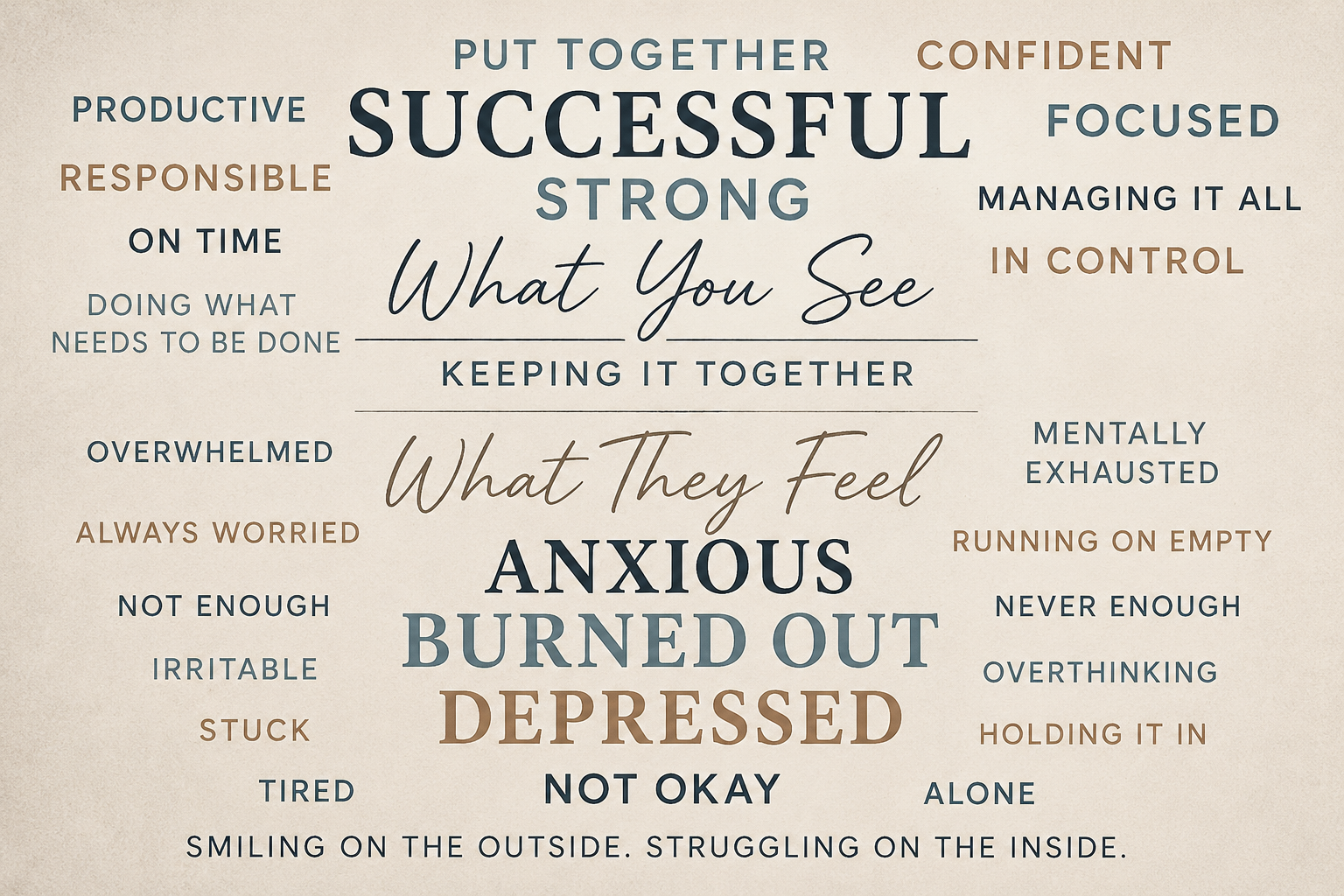
When most people picture someone struggling with their mental health, they often imagine someone who cannot get out of bed, cannot keep a job, or is visibly falling apart. The truth is that the patients I see most often don’t look mentally ill at all.
They go to work every day. They take care of their children. They show up for family gatherings. They answer emails. They pay bills. They smile when people ask how they’re doing.
From the outside, they look successful, responsible, and completely fine. On the inside, many are exhausted.
High Functioning Doesn’t Mean You’re Not Struggling
One of the biggest misconceptions about anxiety and depression is that symptoms have to be obvious before they deserve attention.
Many adults spend months—or even years—telling themselves:
- “I’m just stressed.”
- “Everyone feels this way.”
- “I just need a vacation.”
- “I should be able to handle this.”
Meanwhile, they’re waking up tired every morning, struggling to focus, feeling overwhelmed by simple tasks, and carrying a constant sense of pressure that never seems to go away. Because they’re still functioning, they assume they’re fine. But functioning and thriving are not the same thing.
What Anxiety Really Looks Like
Many people think anxiety means panic attacks. Sometimes it does.
More often, it looks like:
- Constant overthinking
- Difficulty relaxing
- Irritability
- Trouble sleeping
- Feeling “on edge”
- Racing thoughts
- Replaying conversations in your head
- Assuming the worst-case scenario
Some patients tell me they feel like their brain never shuts off. Others describe feeling like they’re always waiting for something bad to happen. Many have felt this way for so long that they assume it’s just part of their personality. It isn’t.
What Depression Really Looks Like
Depression doesn’t always look like sadness.
For many adults, it looks like:
- Lack of motivation
- Low energy
- Mental exhaustion
- Increased irritability
- Loss of interest in hobbies
- Difficulty concentrating
- Feeling emotionally numb
I often hear people say:
“I don’t even know if I’m depressed. I just don’t feel like myself anymore.”
That’s an important statement.
Depression is not always crying all day.
Sometimes it’s simply feeling disconnected from the version of yourself you used to be.
Burnout Is Real
Many working adults and parents are carrying far more than they realize. They are balancing careers, relationships, finances, parenting responsibilities, aging parents, and endless daily demands. Eventually the mental load catches up. Burnout can look remarkably similar to anxiety and depression.
You may find yourself:
- Snapping at people you care about
- Feeling overwhelmed by small tasks
- Losing motivation
- Struggling to focus
- Feeling emotionally drained
Many people blame themselves. In reality, they are running on empty.
When Should You Seek Help?
A good rule of thumb is this:
If your mental health symptoms are affecting your quality of life, relationships, work performance, sleep, energy, or ability to enjoy things you once enjoyed, it’s worth talking with a professional.
You do not have to wait until you’re in crisis. In fact, it’s often easier to make meaningful improvements before symptoms become overwhelming.
You Don’t Have to Be Falling Apart
One of the most common things I hear from new patients is:
“I didn’t think my problems were bad enough to make an appointment.”
The reality is that many people who benefit from psychiatric care are still showing up every day and doing what needs to be done. They’re functioning. They’re surviving. But they’re tired of feeling overwhelmed, exhausted, anxious, or disconnected. And that’s enough reason to ask for help.
Psychiatric Medication Management for Adults in Ohio
At Open Chair Psychiatry & Mental Wellness, I provide telehealth psychiatric medication management for adults across Ohio. Common concerns include anxiety, depression, mood disorders, burnout, stress-related symptoms, and other mental health conditions that affect daily functioning and quality of life. If you’re struggling but feel like you’re supposed to keep pushing through, know that you don’t have to wait until things get worse before seeking support.