Why a Delayed Text Feels So Personal: Anxiety, Overthinking, and the Group Chat Effect
They Haven’t Replied Yet. Now What?
You send a text. A few minutes pass. Then an hour. Maybe longer. You glance at your phone again. Still nothing. At first, it doesn’t seem like a big deal. But before long, your mind starts filling in the blanks.
“Did I say something wrong?”
“Maybe that joke didn’t land.”
“What if they’re upset with me?”
“Should I send another message?”
“Am I overthinking this?”
If you’ve ever found yourself spiraling because of a delayed text, an unanswered message, or a suddenly quiet group chat, you’re not alone. In fact, it’s one of the most common examples of how anxiety can take a small amount of uncertainty and turn it into a much bigger story.
Why Does a Delayed Text Feel So Personal?
Logically, most of us know there are dozens of reasons someone may not respond right away.
They’re working. They’re driving. They’re helping their kids with homework. They’re taking a nap. They’re watching Netflix with their phone across the room. They’re mentally composing a response and then forgetting to hit send. Yet despite knowing all of this, many people still feel a knot in their stomach when a message goes unanswered.
That’s because the emotional part of the brain isn’t always interested in logic. It wants certainty. And when certainty isn’t available, anxiety often steps in to provide an explanation—even if that explanation isn’t accurate.
The Group Chat Effect
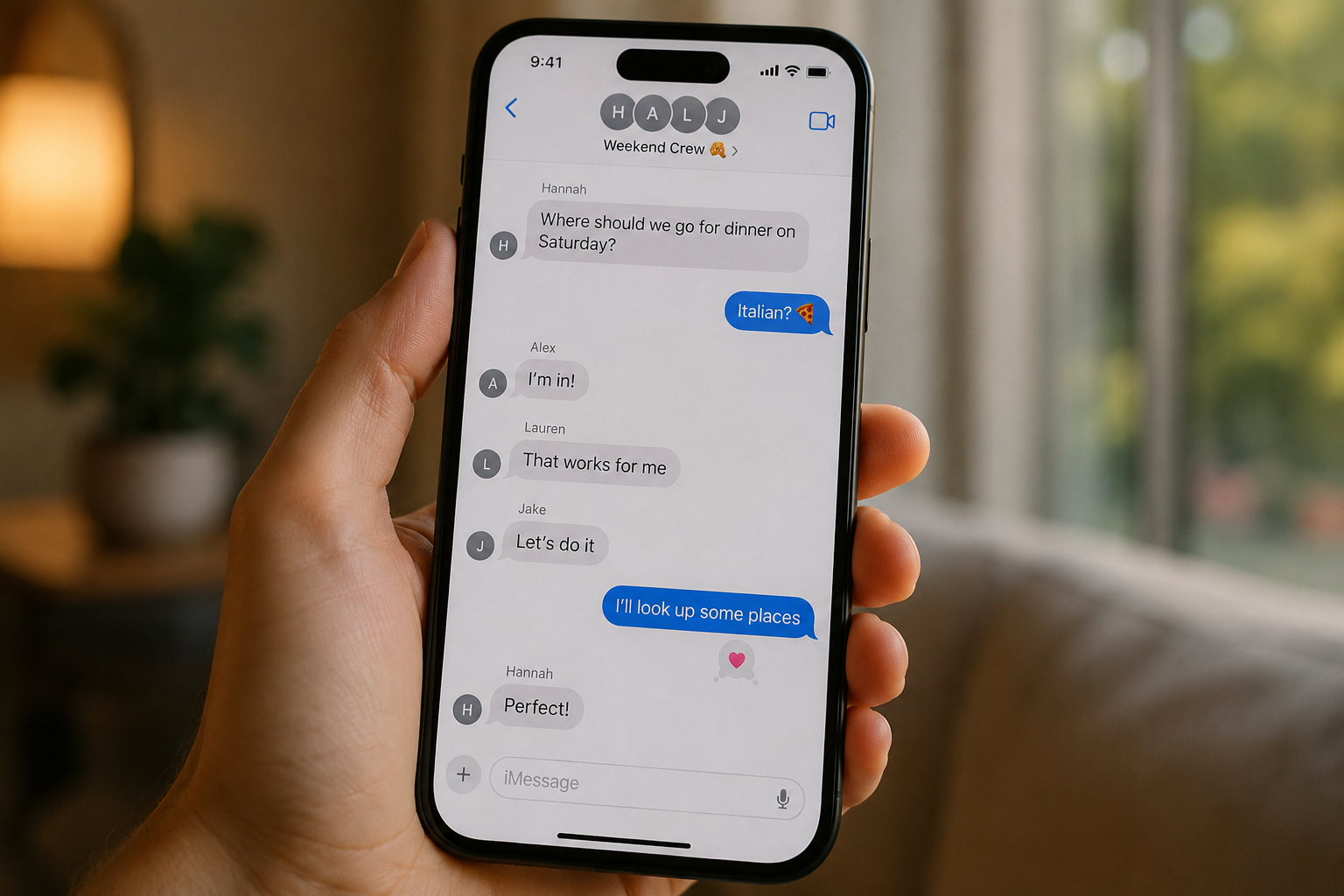
The group chat is where this tendency really shines. Someone reacts to everyone else’s message but not yours. Nobody responds to the meme you shared. A conversation suddenly goes quiet after you comment. A few people seem to be chatting while your message sits there unanswered. Within seconds, anxiety can transform these everyday situations into evidence that something is wrong.
The reality?
Most people are paying far less attention to our messages than we imagine. Not because they don’t care, but because they’re busy navigating their own lives, responsibilities, stressors, and distractions. The group chat isn’t usually sending secret signals. But anxiety is very good at convincing us that it is.
When Anxiety Starts Filling in the Blanks
One of the biggest challenges with anxiety is that it dislikes unanswered questions. If information is missing, the brain tries to complete the puzzle. Unfortunately, anxious thinking tends to fill those gaps with worst-case scenarios. A delayed response becomes rejection. A short response becomes anger. A forgotten reaction becomes proof that someone doesn’t like you. The problem isn’t that your brain is creating a story. The problem is that anxiety often presents that story as fact.
And once we start treating assumptions like evidence, the spiral begins.
So What Do You Do When the Spiral Starts?
The next time you find yourself staring at an unanswered text or replaying a conversation in your head, pause and ask yourself one simple question:
“What do I actually know to be true right now?”
Not what you fear. Not what your anxiety is suggesting. Not what could possibly be happening. What do you actually know? Often, the answer is surprisingly simple: Someone hasn’t replied yet.
That’s it.
Everything else may be an assumption. That doesn’t mean your feelings aren’t real. The worry, uncertainty, and discomfort can feel very real in the moment. But feelings aren’t always facts, and anxiety has a way of blurring the line between the two. The good news is that awareness can be powerful. Once you recognize the pattern, you can begin to challenge it. You can remind yourself that a delayed response isn’t necessarily rejection. A quiet group chat isn’t necessarily exclusion. A short text isn’t necessarily anger. And a missed reaction isn’t necessarily a statement about your worth. Most of the time, people are simply living their lives- working, parenting, running errands, attending meetings, forgetting to charge their phones, or getting distracted by the same endless list of responsibilities that we all have.
The next time your brain starts building a case against you because someone hasn’t responded, consider offering yourself the same grace you would offer a friend. Because more often than not, the group chat isn’t mad at you. Your text didn’t ruin the friendship. And the story anxiety is telling may not be the story that’s actually happening.