When people discuss starting mental health medications, one of the most common questions I hear is: “If the medication is in my body today, why don’t I feel better today?”
It’s a reasonable question. Most people are used to medications working quickly. If you take ibuprofen for a headache, you often feel relief within an hour. If you take an antibiotic, the medication starts fighting bacteria right away.
Psychiatric medications work differently.
While many medications reach the bloodstream within hours, the changes that improve mood, anxiety, sleep, and emotional regulation happen much more gradually. Understanding why can make the waiting period a little less frustrating.
The Medication Gets There Quickly
Many psychiatric medications are absorbed and begin circulating in the body within a few hours. In fact, after taking the first dose, the medication is already interacting with receptors in the brain. The challenge is that symptom improvement isn’t usually caused by the medication simply being present. It’s caused by the brain gradually adapting to those changes. Think of it like planting grass seed. The seeds may be in the soil on day one, but the lawn doesn’t look different yet. The growth happens underneath the surface before you can see it.
Your Brain Needs Time to Adjust
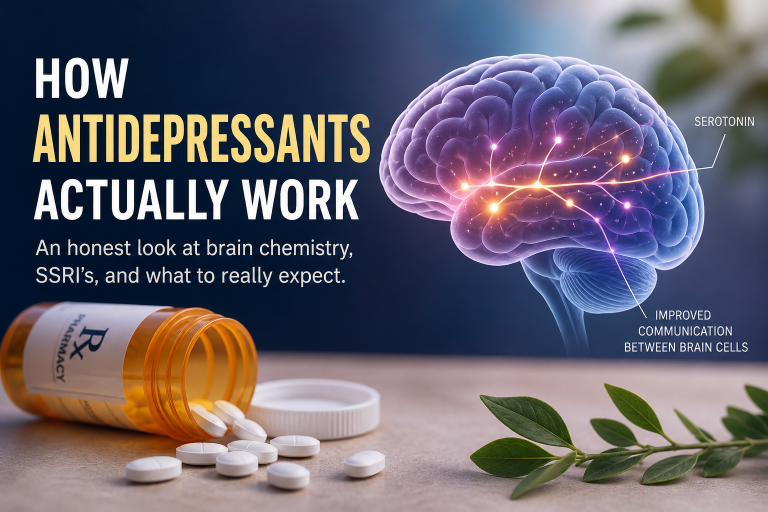
The brain contains billions of nerve cells that communicate using chemical messengers called neurotransmitters. Many psychiatric medications influence neurotransmitters such as serotonin, norepinephrine, dopamine, or others involved in mood, anxiety, attention, and emotional regulation. When medication changes the availability of these chemicals, the brain doesn’t immediately settle into a new normal. Instead, it begins a process of adaptation.
Over days and weeks, receptors become more or less sensitive, communication pathways adjust, and networks involved in mood and emotional processing gradually function differently. This is why many antidepressants and anxiety medications can take several weeks before meaningful improvement is noticed.
The “Construction Zone” Analogy
Think of starting a new psychiatric medication like road construction. On the first day of a construction project, workers don’t immediately open a brand-new highway. They first place signs, move equipment, reroute traffic, and begin making changes behind the scenes. Sometimes traffic may even seem worse before it gets better. Psychiatric medications can feel similar. The brain is making adjustments that aren’t immediately visible. Occasionally, mild side effects appear before symptom improvement does. That doesn’t necessarily mean the medication isn’t working. It may simply mean the brain is still in the adjustment phase.
Why Side Effects Sometimes Appear First
Many patients find it frustrating that side effects can show up before benefits. This happens because some physical effects of medication occur immediately when neurotransmitter levels begin to change. Improvements in mood, anxiety, and emotional resilience often depend on longer-term changes in brain signaling and neural pathways. In other words, the body notices the medication before the brain has fully adapted to it. This is one reason providers often encourage patients to give a medication adequate time before deciding whether it is effective.
Some people may experience certain side effects more intensely than others. This can occur for a variety of reasons, including differences in metabolism. Each person has a unique genetic makeup that influences how medications are absorbed, broken down, and utilized by the body. As a result, a medication that works well for one person with minimal side effects may affect someone else quite differently.
Not Every Medication Takes Weeks
It’s important to know that not all psychiatric medications follow the same timeline. Some medications may improve sleep within days. Certain anxiety symptoms may begin to ease relatively quickly. Other medications may take several weeks before their full effects become noticeable. The timeline depends on the medication, the condition being treated, the dose, and individual differences in how each person’s body processes medication.
Why Some Medications Feel Different
While most psychiatric medications take time to produce their full therapeutic effects, there are some exceptions. Certain medications, such as benzodiazepines, can provide relief within minutes to hours rather than weeks. These medications work by enhancing the activity of a neurotransmitter called GABA, which has a calming effect on the brain and nervous system. Because of this mechanism, people may experience a rapid reduction in anxiety, panic symptoms, or physical tension shortly after taking them.
However, this immediate relief is different from the longer-term changes produced by many antidepressants and other maintenance medications. Fast-acting medications often provide temporary symptom relief but do not necessarily address the underlying patterns contributing to ongoing symptoms. Their effects also tend to wear off as the medication leaves the body. A useful analogy is the difference between using an umbrella during a rainstorm and improving the drainage around your house. The umbrella helps immediately, but only while you’re holding it. Improving the drainage takes longer, but the benefits last much longer as well. For many people, psychiatric treatment involves balancing short-term symptom relief with longer-term strategies designed to create lasting improvement.
Progress Is Often Gradual
Many people expect to wake up one morning and suddenly feel dramatically different. More often, improvement happens gradually.
Patients may notice:
- They are worrying less.
- Their reactions feel less intense.
- They are sleeping more consistently.
- They feel less emotionally exhausted at the end of the day.
- They are handling stress better than they were a few weeks ago.
Sometimes family members notice these changes before the patient does.
The Goal Isn’t to Change Who You Are
A common concern is that psychiatric medication will somehow change a person’s personality. Effective treatment should not make you into someone else. The goal is to reduce symptoms that are getting in the way of your ability to function, enjoy life, maintain relationships, and be the version of yourself you want to be. Many patients describe successful treatment not as feeling different, but as feeling more like themselves again.
The Bottom Line
Psychiatric medications often require patience because the brain needs time to adapt to the changes the medication creates. While the medication may enter the body quickly, the improvements most people are looking for—better mood, less anxiety, improved emotional regulation, and greater resilience—typically develop over days to weeks. If you’re starting a new medication, don’t be discouraged if you don’t notice immediate results. Improvement is often happening beneath the surface before it becomes noticeable in everyday life. When starting a new medication, it’s important to remember that lack of immediate improvement does not necessarily mean the medication is ineffective. In many cases, the brain is already beginning to adapt, even before noticeable changes occur. The waiting period can be frustrating, but understanding the process can help set realistic expectations and make the journey a little easier.