“I don’t know why everyone keeps asking about my sleep. I’m here because I’m anxious.”
I’ve heard some version of that more times than I can count. Sometimes it’s anxiety. Sometimes it’s depression. Sometimes it’s trouble concentrating. Sometimes it’s feeling “off.”
But almost every psychiatric appointment eventually circles back to one question:
“How have you been sleeping?”
It can seem unrelated. In reality, it may be one of the most important questions I’ll ask.
Sleep isn’t just about being tired
When most people think of poor sleep, they picture someone yawning through work or reaching for another cup of coffee. Mental health is different. A lack of quality sleep doesn’t just make you tired. It can make anxiety louder. It can make depression feel heavier. It can make ADHD symptoms appear worse. It can increase irritability. It can make medications seem like they’re “not working.” That’s because your brain doesn’t get a chance to reset the way it’s supposed to.
Your brain is trying to do maintenance overnight
Think about your phone. Every so often it needs updates. Sometimes it restarts itself overnight.
Imagine never allowing it to reboot. Eventually apps start freezing. Battery life gets worse. Things become slower.
Your brain works in a similar way.
During sleep, your brain is constantly organizing memories, regulating emotions, restoring energy, and preparing you for the next day. When that process gets interrupted night after night, it becomes harder for your brain to manage stress.
Anxiety can cause poor sleep…
This is the part most people expect.
You finally climb into bed. The house is quiet. No TV. No work. No distractions.
And suddenly…
Your brain decides it’s the perfect time to replay every awkward conversation you’ve had since middle school.
Sound familiar? That’s anxiety.
Your body may be exhausted. Your brain is not.
…But poor sleep can also cause anxiety
This surprises many people.
Sometimes anxiety isn’t creating the sleep problem. The sleep problem is making anxiety worse.
Even one bad night of sleep can make you:
- More emotionally reactive
- More sensitive to stress
- Less patient
- More forgetful
- More likely to catastrophize situations
Now imagine that happening every night for months.
“I sleep eight hours.”
That’s great. But there’s another question.
Was it good sleep?
Someone can technically sleep eight hours and still wake up exhausted.
Reasons include:
- Frequent awakenings
- Sleep apnea
- Restless legs
- Medications
- Alcohol
- Nightmares
- Stress hormones staying elevated
That’s why psychiatric providers don’t only ask how long you slept. We also ask how rested you felt.
Why we sometimes treat sleep before anything else
Patients are occasionally surprised when we spend an entire appointment talking about sleep. Here’s why.
Imagine trying to judge whether an antidepressant is working while you’re sleeping four hours a night. Or trying to determine if someone has ADHD when they’re chronically sleep deprived. Sleep problems can imitate (or worsen) many psychiatric conditions.
Sometimes improving sleep doesn’t solve everything. But it often gives us a much clearer picture of what’s really happening.
Sleep isn’t always fixed with medication
Many people assume that if they’re talking to a psychiatric provider about sleep, the appointment will end with a sleeping pill. Not necessarily. Sometimes the best “prescription” isn’t a prescription at all.
Depending on the situation, we might talk about:
- Consistent wake-up times
- Evening routines
- Caffeine timing
- Screen use before bed
- Stress management
- Underlying medical conditions
- Medication timing
Every person is different.
So…why do we keep asking?
Because sleep touches almost everything else.
If your anxiety isn’t improving, I want to know about your sleep. If your depression suddenly worsened, I want to know about your sleep. If your ADHD medication stopped helping, I’m probably going to ask about your sleep.
Not because I think you’re simply tired. Because your brain and your sleep are working together every single day. Understanding one helps us understand the other.
One final thought
If you’ve been struggling with anxiety, depression, mood changes, or difficulty concentrating, don’t be surprised if your psychiatric appointment includes several questions about your sleep. They’re not small talk. They’re often one of the biggest clues we have.
Sometimes the answer isn’t adding another medication. Sometimes it’s figuring out why your brain hasn’t had a chance to rest.
Looking for psychiatric medication management in Ohio?
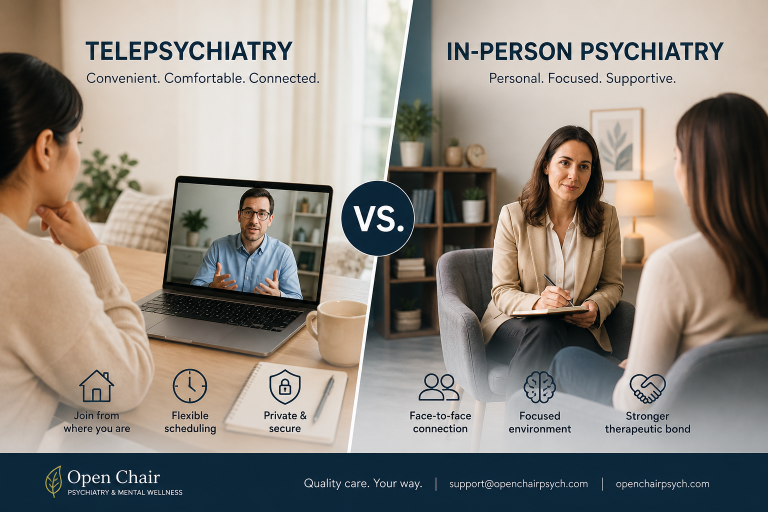
At Open Chair Psychiatry & Mental Wellness, I provide telehealth psychiatric evaluations and medication management for adults throughout Ohio. Every treatment plan is individualized because there isn’t a one-size-fits-all approach to mental health.
Ready to get started? Schedule an appointment online and let’s work together to build a treatment plan that fits your goals.